
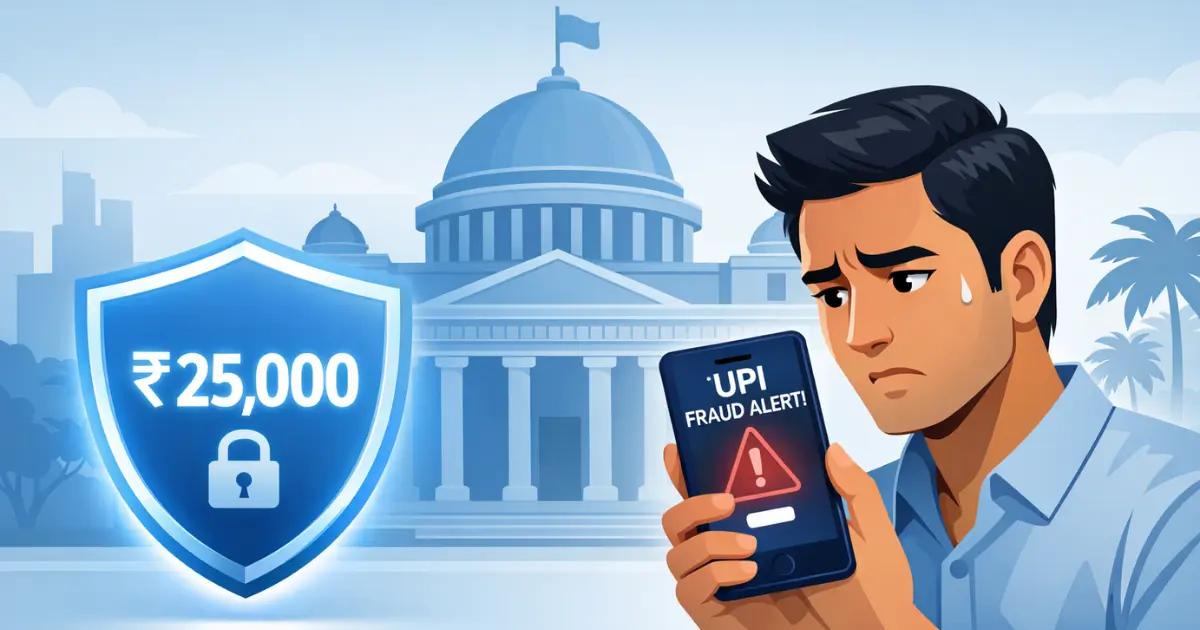
Digital payments have made life easier, but they have also increased the risk of fraud. In 2026, the Reserve Bank of India has taken a major step to protect customers. A new framework now proposes compensation of up to ₹25,000 for small-value fraudulent digital transactions.
This guide explains what the RBI fraud compensation rule is, who can claim it, how it works, and what you should do if you lose money in a UPI or card scam.
What Is the RBI ₹25,000 Fraud Compensation Rule?
The Reserve Bank of India has proposed a new customer protection framework that allows compensation up to ₹25,000 for losses caused by unauthorized electronic transactions such as UPI fraud, debit card misuse, or internet banking scams.
The proposal was announced by Sanjay Malhotra, Governor of the Reserve Bank of India, as part of RBI’s broader push to strengthen trust in India’s digital payment ecosystem.
This rule is not a reward or insurance. It is a liability protection mechanism designed to ensure customers are not unfairly burdened when fraud occurs without their fault.
Why RBI Introduced This Fraud Shield
India processes billions of UPI and card transactions every month. While systems are improving, fraud cases have also increased, especially:
- Fake customer care calls
- UPI collect request scams
- Phishing links and SMS fraud
- Unauthorized card transactions
Earlier, many customers struggled to recover small fraud amounts because disputes took time or banks denied liability. The new RBI framework standardizes customer protection and places clear responsibility on banks.
What Types of Fraud Are Covered?
The ₹25,000 compensation applies to unauthorized electronic transactions, including:
- UPI fraud where you did not authorize payment
- Debit or credit card fraud
- Internet banking fraud
- Wallet or app based payment fraud
It generally applies when:
- The customer has not shared OTP, PIN, or passwords knowingly
- Fraud happened due to system failure, third-party breach, or delayed bank action
If the customer shares credentials voluntarily, compensation may not apply.
Who Is Eligible for Compensation?
You may be eligible if all the following conditions are met:
- The transaction was unauthorized
- You reported the fraud promptly
- You did not act negligently
- The loss amount is within RBI specified limits
Reporting Time Limits Matter
RBI guidelines strongly link compensation eligibility to how quickly you report fraud:
- Within 3 days: Zero customer liability in most cases
- 4 to 7 days: Limited liability, subject to bank policy
- After 7 days: Liability decided by bank investigation
The faster you act, the higher your chance of full compensation.
Is the ₹25,000 Compensation Automatic?
No. Compensation is not automatic.
You must:
- Report the fraud to your bank immediately
- Submit a formal complaint or dispute
- Cooperate during the investigation
Banks are required to provisionally credit the amount within a defined time if the claim is valid.
How to Claim RBI Fraud Compensation Step by Step
Step 1: Inform Your Bank Immediately
Use customer care, banking app, or branch visit. Note the complaint number.
Step 2: Block the Payment Instrument
Ask the bank to block UPI ID, card, or net banking access to prevent further loss.
Step 3: File a Written Complaint
Submit transaction details, date, amount, and screenshots if available.
Step 4: Track Resolution Timeline
Banks must resolve electronic fraud complaints within a fixed timeframe under RBI norms.
Step 5: Escalate If Needed
If the bank fails to act, escalate to the banking ombudsman.
How This Rule Changes Customer Liability
Earlier, many banks placed the burden on customers, especially for small fraud amounts. The new framework makes it clear that:
- Customers are protected if they act responsibly
- Banks must improve fraud detection systems
- Delay by banks increases their liability
This aligns India with global digital banking protection standards.
Common Mistakes That Can Cancel Your Claim
Avoid these errors:
- Delaying fraud reporting
- Sharing OTP or PIN even unknowingly
- Clicking unknown links and approving transactions
- Ignoring suspicious debit alerts
Banks will examine user behavior before approving compensation.
How to Protect Yourself From Digital Fraud
Even with RBI protection, prevention is critical:
- Never share OTP or UPI PIN
- Verify collect requests carefully
- Do not trust unsolicited calls claiming to be bank officials
- Enable transaction alerts
- Check account statements regularly
If you are planning finances digitally, use tools like SIP, FD, or tax calculators to stay organized and alert.
Frequently Asked Questions
No. RBI sets the rules. Compensation is paid by banks as per RBI guidelines.
Yes, unauthorized UPI transactions are covered if reported on time.
Compensation limits depend on transaction type and bank policy. The ₹25,000 amount applies to small-value fraud protection.
Usually no. Sharing OTP or PIN is considered customer negligence.
Banks are expected to resolve claims within defined timelines, often within 10 to 30 working days.
Yes. The rule applies to all bank customers equally.